
The UK’s love affair with cod is under serious strain—and for the first time, the warning feels impossible to ignore.
A recent Guardian article reporting on the latest update from the Marine Conservation Society’s Good Fish Guide delivered a stark message: UK-caught cod has now been downgraded to the worst sustainability rating, with consumers urged to avoid it altogether as stocks reach dangerously low levels.
For a nation built on fish and chips, this isn’t just an environmental issue—it’s cultural.
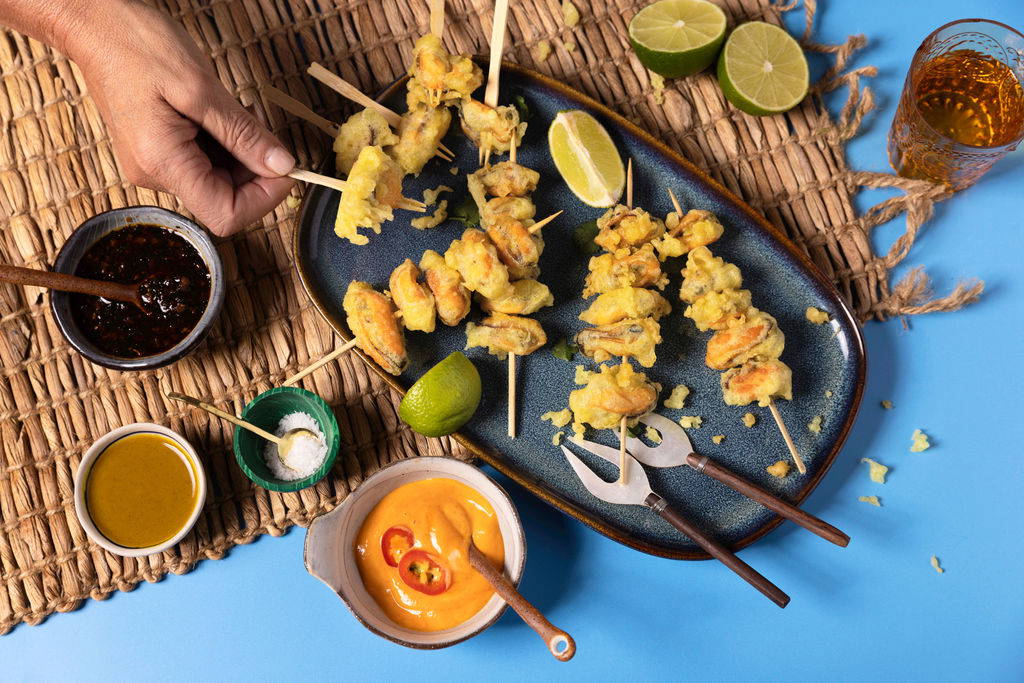
But while much of the conversation focuses on what we should stop eating, far less attention is given to what we should eat instead. And this is where farmed shellfish—particularly Scottish mussels—quietly offer one of the most compelling solutions.
The uncomfortable truth about our “big five” obsession
The UK seafood market remains heavily concentrated around a handful of species: cod, haddock, salmon, tuna and prawns. This narrow demand isn’t just habit—it’s systemic.
Retail, foodservice, and supply chains are all built around delivering consistency at scale. The result? We overfish what we love, import what we can’t supply, and ignore what’s thriving on our own doorstep.
Even as sustainability advice evolves, consumer behaviour lags behind. The Good Fish Guide is updated twice yearly, yet awareness—and more importantly, action—remains limited. The appetite (excuse the pun) to change our habits is just not there.
The ‘No Brainer’ Seafood
If there were ever a “no-brainer” protein, mussels would be it.
- They require no feed, fertiliser or freshwater inputs
- They actively clean the ocean through filter feeding
- They support biodiversity by creating reef-like habitats
- They are locally farmed, particularly across Scotland
- And crucially, they are rated as a “best choice” by sustainability guides
In fact, experts increasingly describe mussels as one of the most environmentally beneficial foods we can eat—delivering both nutrition and ecosystem restoration (Source: Profressor De Roos, Aberdeen University)
At a time when wild fisheries are under pressure, farmed shellfish isn’t just sustainable—it’s regenerative.
Why mussels tick almost every consumer box
From a product perspective, mussels are well positioned:
1. Versatility
Mussels carry flavour beautifully—whether in Thai broths, Spanish-style tapas, or classic white wine sauces. They adapt across cuisines in a way few proteins can.
2. Value
They are one of the most affordable seafood options available, offering a low-cost entry point into sustainable eating.
3. Nutrition
Rich in omega-3, vitamins and minerals, mussels compete, and in some cases outperform, nutritionally with the “big five”.
4. Local and low-impact
They align perfectly with growing demand for British, low-carbon, and traceable food.
So why aren’t we eating more of them?
Despite all this, mussels remain underutilised. The barriers are not environmental—they’re behavioural and structural.
1. Perceived lack of convenience
Unlike cod fillets, mussels often require cleaning, sorting, and confidence in preparation. Even today, many consumers still see them as “faffy” or risky to cook.
2. Accessibility and merchandising
Mussels are rarely given prime shelf space or menu prominence. When they are available, formats don’t always match modern convenience expectations.
3. Confidence gap
Consumers simply don’t know how to cook them—or fear getting it wrong. (Source: SSMG Consumer Research 2024)
4. Format mismatch
The UK market is built around fillets and ready-to-cook portions. Mussels, by contrast, are perceived to be sold whole, live —creating friction at the point of purchase.
5. Cultural inertia
Fish and chips is easy. Mussels can feel like a restaurant dish, not an everyday staple.
The bigger picture: saving cod by changing habits
The reality is stark: we cannot continue eating cod at current levels without accelerating their decline.
But telling consumers to “stop” isn’t enough. We need compelling, accessible alternatives that fit seamlessly into modern lifestyles.
Mussels have the potential to do exactly that—but only if the industry bridges the final gap:
- More ready-to-cook formats
- Better retail visibility
- Stronger menu integration
- Clearer consumer education
Because when mussels are made easy, people do buy them.
A call to be more shellfish
If we want to protect the future of cod, the solution isn’t just better fisheries management—it’s dietary diversification.
We need to shift from a narrow seafood culture to a broader one. And farmed shellfish, particularly Scottish mussels, offer the clearest path forward.