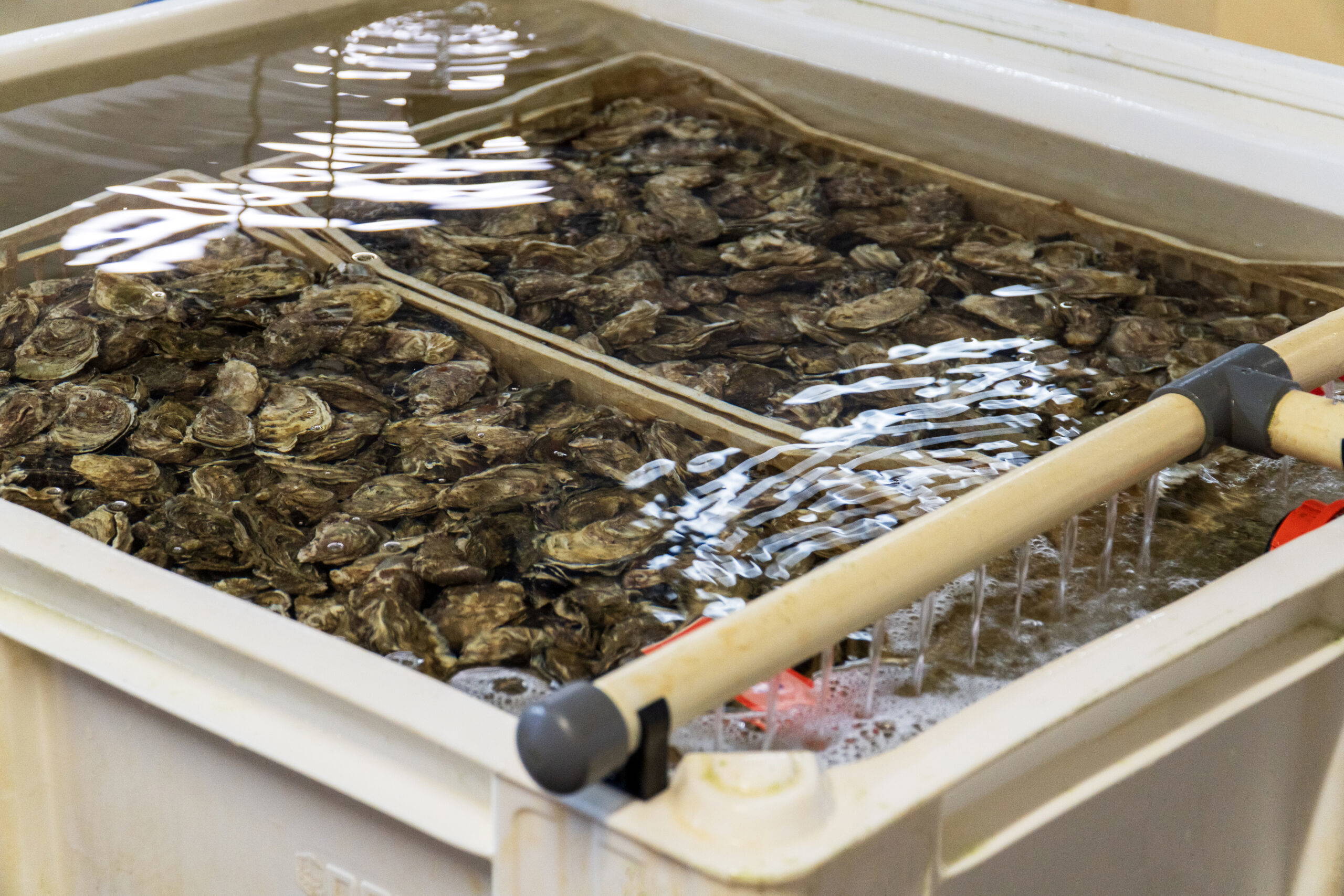
Beneath Scotland's flowing tides, oysters quietly grow
nurtured by mineral-rich, untamed waters, each oyster is naturally unique, reflecting its surroundings like a natural imprint of sea, tide, and time.

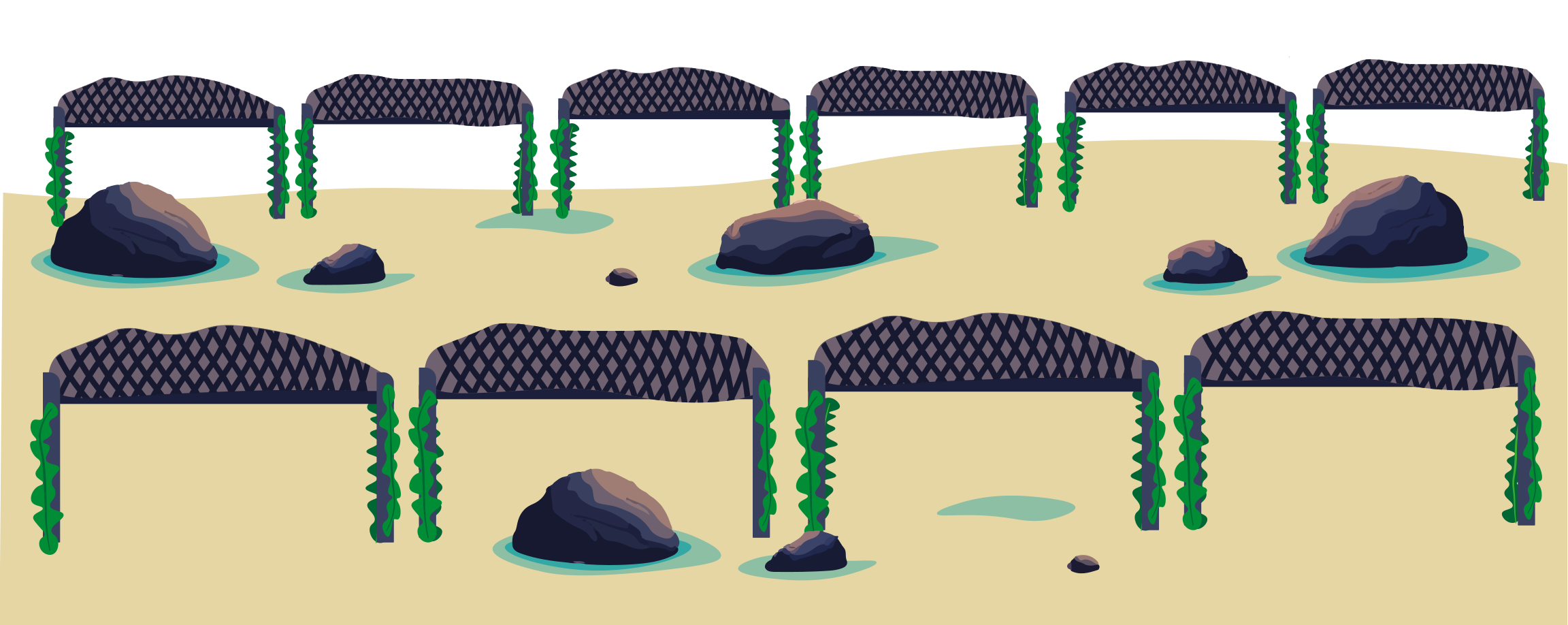
Suspended from cages or resting on trestles, the oysters gently tumble with the tidal flow, naturally filtering nutrient-rich waters. This sustainable cultivation provides a highly nutritious protein while supporting biodiversity and maintianing water quality
Eat Scottish Oysters
Oyster lifecycle
The journey of a Scottish Pacific Oyster begins with spat, or baby oysters, which are collected from hatcheries . These spat are carefully placed into net bags or cages suspended in the water, where they are gently tumbled by the tides. This tumbling ensures that each oyster grows evenly and develops a strong shell.
As they grow, the oysters feed naturally on plankton and microscopic algae, filtering the water and contributing to a healthier marine environment. Over the course of 2–3 years, they gradually mature into full-sized oysters, accumulating protein, omega-3 fatty acids, vitamins, and minerals.
By the time they are ready for harvest, Scottish Pacific Oysters are not only a nutritious food source but also an environmentally sustainable one, helping maintain water quality and supporting biodiversity in the coastal ecosystem.
Anatomy of a Rock Oyster
(Pacific Oyster)

Gills – filter water and takes nutrients for grow.
Stomach
Heart
Cerebral Ganglion
Abductor Muscle
Anus & Rectum
Shell – Created by capturing carbon from the atmosphere.
Watch and learn
Discover how Scottish mussels and oysters are grown, cooked, and enjoyed — dive into their world today.
find out more