
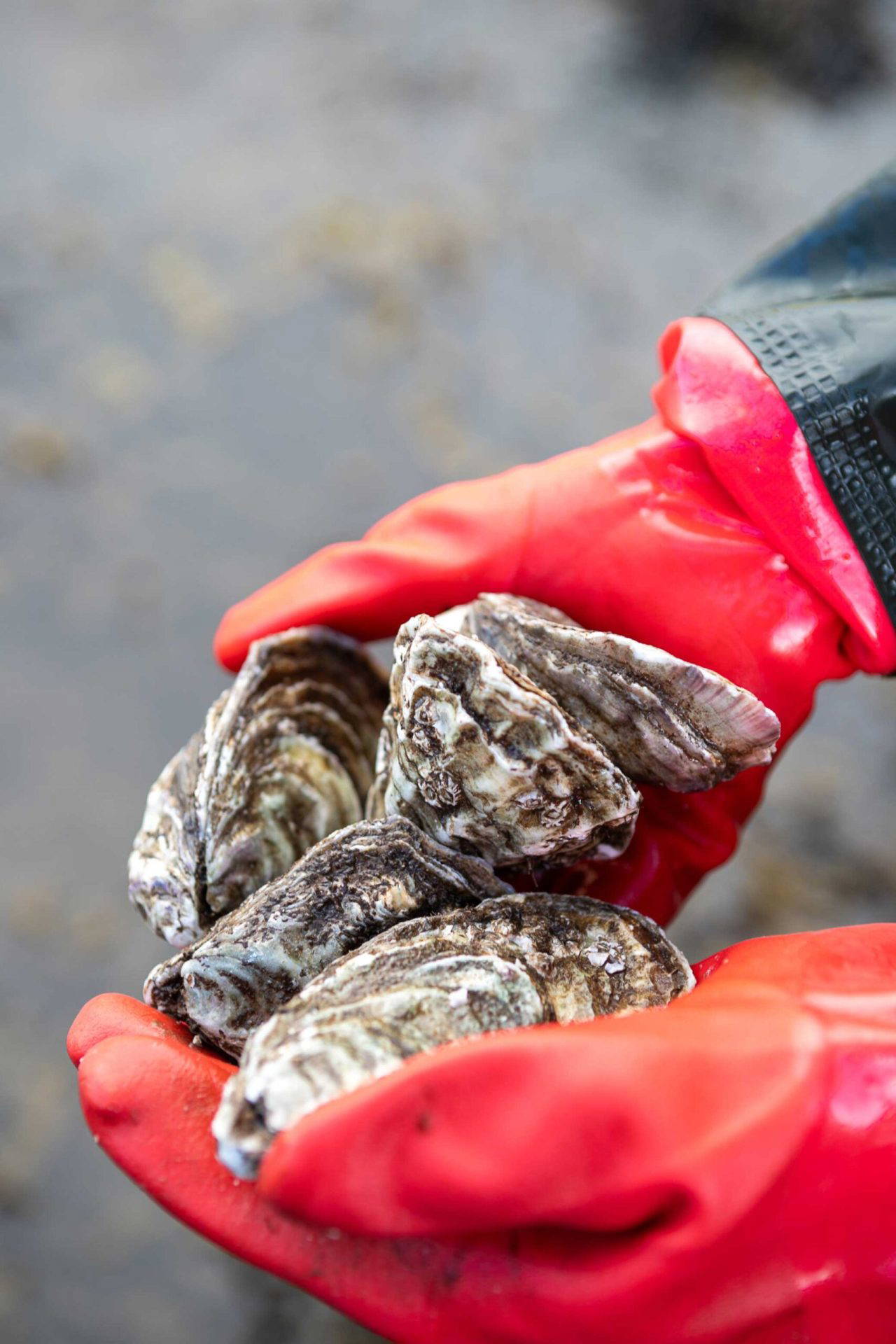
Recent reports on the Restoration Forth project have highlighted encouraging progress in efforts to return European flat oysters (native) to the Firth of Forth. Once abundant but later pushed to the brink of extinction, native oysters are now showing strong signs of recovery thanks to collaborative conservation work.
Since 2023, the project has deployed 46,780 native oysters across four sites. These oysters were sourced from the Loch Ryan Oyster Fishery—a member of the Association of Scottish Shellfish Growers and one of Scotland’s most important sources of robust native stock.
According to updates shared by project partners including Heriot-Watt University, the Marine Conservation Society, WWF, and the Scottish Seabird Centre, early monitoring shows an average survival rate of around 88%. One oyster was even recorded as doubling expected annual growth, reaching 2.1 cm in its first year—far higher than the typical 1 cm.
In statements released by the project, Dr Naomi Kennon of Heriot-Watt University described the results as “very exciting” and “hugely promising,” noting that oysters act as “incredible underwater engineers”—filtering water, storing carbon, and enhancing biodiversity by creating habitat for a wide range of marine life.
Similar comments published by the Marine Conservation Society highlighted that the young oysters are “not just surviving – they’re thriving,” thanks to the combined efforts of volunteers, community groups, and scientific partners.
Importantly, this work aligns with wider national policy. The Scottish Government Marine and Coastal Restoration Plan explicitly recognises native oyster restoration as a priority opportunity, setting out actions to accelerate habitat and species recovery across Scotland’s seas.
Restoration Forth is not alone. Across Scotland, other pioneering initiatives are helping rebuild marine ecosystems. A notable example is the Seawilding project, co-founded by Danny Renton, which focuses on restoring seagrass meadows and native oyster habitats on the west coast. Together, these projects reflect a growing national movement toward marine recovery.
Why This Restoration Work Matters
Native oyster beds provide benefits that reach far beyond the oysters themselves:
Water improvement — Native oysters filter large volumes of water, supporting clearer, healthier coastal habitats.
Biodiversity boost — Their reefs create nursery grounds for fish, crustaceans, and other species.
Natural climate resilience — Oyster reefs help stabilise sediments and soften wave energy.
Ecosystem recovery — Restoring native oysters is starting to reverse habitat loss dating back more than a century.
Projects like Restoration Forth are essential in rebuilding marine ecosystems that once supported rich coastal life.
How Oyster Farming Helps Protect Recovering Wild Stocks
While restoration projects focus on rebuilding wild populations, sustainable oyster farming ensures the public can continue enjoying this nutritious (13 essentials nutrients), low-carbon seafood without placing pressure on recovering seabeds.
1. It reduces pressure on wild stocks
Farmed oysters provide a steady supply for restaurants and consumers—supporting demand while allowing wild stocks to regenerate.
2. It is one of the lowest-impact food systems
Oysters require no feed, or fertiliser and actively improve water quality as they grow.
3. It enables restoration through hatchery capacity
Large-scale native oyster restoration depends on reliable access to disease-tested oyster seed. Because Scotland is largely a disease-free zone, imports are heavily restricted, making domestic hatchery production essential.
Commercial hatcheries—supported in part by the Pacific oyster farming sector—provide the breeding scale and biosecurity standards restoration programmes depend upon.
4. It strengthens coastal communities
Beyond aquaculture itself, oysters are increasingly becoming focal points for community identity and local economies. The Stranraer Oyster Festival, for example, brings the whole town together each year and generates a valued income for the local economy. Events like this demonstrate how marine restoration and sustainable seafood can deliver tangible social and economic benefits alongside environmental gains.
Taking a collaborative approach to restoration
The positive results from Restoration Forth—and other initiatives such as Seawilding—show what can be achieved when science, communities, policy, and responsible aquaculture work together.
Restoration rebuilds vital ecosystems. Sustainable farming supports low-impact food production. Hatcheries provide the seed supply that makes recovery possible at scale.
Together, they create a future where wild oyster reefs and farmed oyster production can both flourish—supporting Scotland’s seas, coastal communities, and food culture.
Sources:
https://www.wwf.org.uk/sites/default/files/publications/Dec23
https://www.wwf.org.uk/sites/default/files/2025-05/Planting-the-Restoration-Forth-seed.pdf