
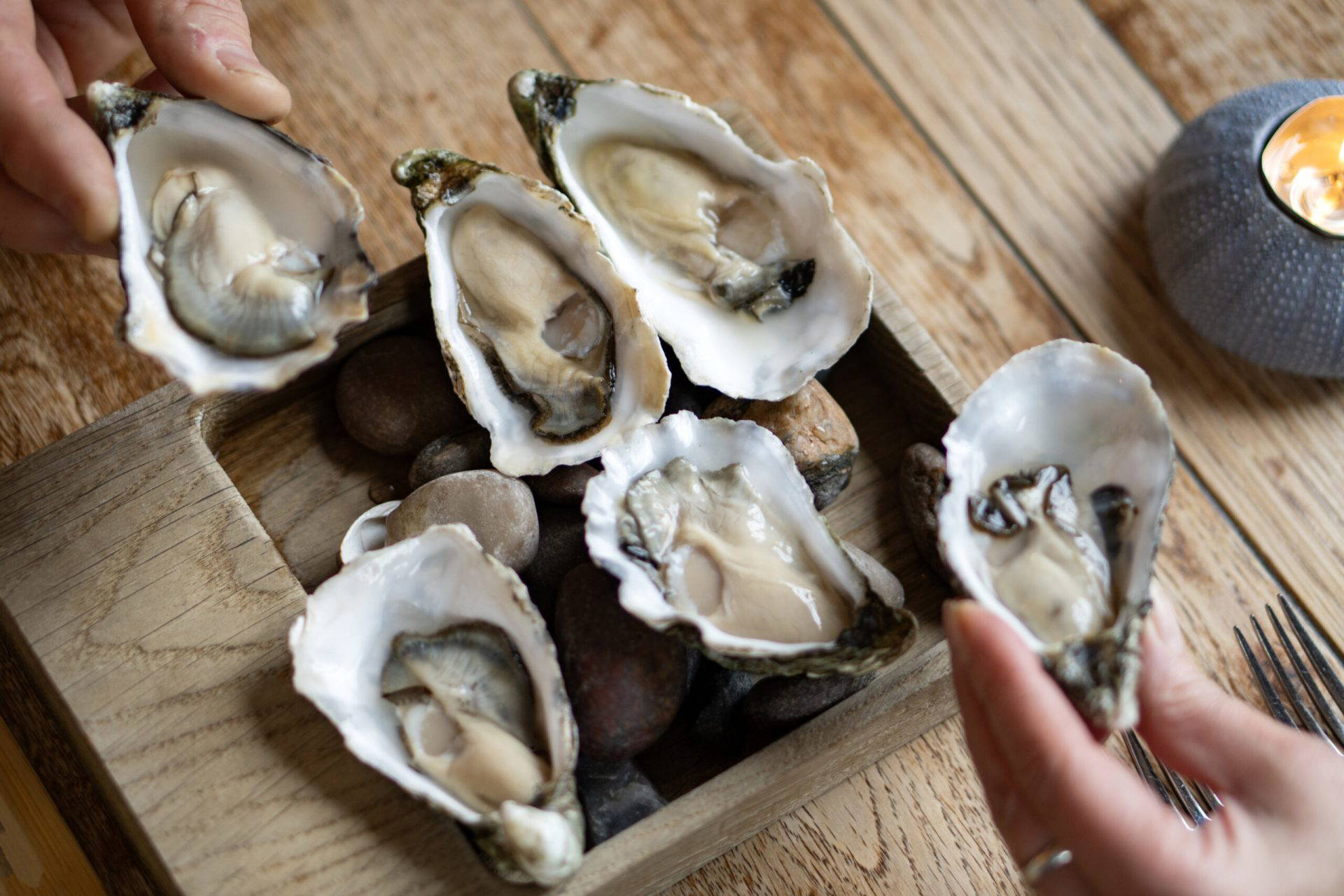
The question “Are oysters vegan?” sounds simple, but it has become one of the most contested discussions in plant-based eating. Oysters sit at an unusual crossroads: they’re animals, yet lack a brain or central nervous system, are praised for sustainability so therefore blur the lines many people assume are clear.
Inspired by Jordan Cooper’s article in the VegOut newsletter “Why some vegans eat oysters, and others refuse”, we decided to explore this further.
Cooper defines the split within the vegan community this way: some see oysters as ethically permissible to eat because they likely don’t feel pain — having neither a brain nor a central nervous system — while others think the fact oysters are animals puts them off limits.
There are different viewpoints across the vegan community which adds to the debate and opens up more discussion about what veganism really means:
Harm-based view:
If veganism’s core moral concern is reducing suffering, then organisms that probably don’t experience suffering might not fall under its ethical restrictions.
This interpretation ranks ‘beings’ according to their capacity for suffering, not simply their taxonomy. Under this view, eating oysters might reduce overall suffering compared with animal products we know involve pain and fear.
Identity/consistency view:
Veganism has historically meant no animal products at all. Even ambiguous or minimally sentient animals should be excluded to preserve a clear boundary.
Cooper’s article points to social tensions: some vegans fear that exceptions like oysters dilute the movement’s clarity, while others argue rigid rules can alienate potential allies and reduce harm overall
Veganism as rights-based view:
In this view, all animals deserve to live free from exploitation. Simply consuming an animal is unethical, regardless of its nervous system. This is closer to The Vegan Society stance and mainstream vegan definitions. Source: PETA UK
We then checked out the discussion on Reddit and they reflect this divide: some argue veganism must strictly exclude any animal product, while others say morally consistent vegans can draw nuanced lines based on sentience and harm.
We asked ChatGPT to create a poll based on ‘upvotes’ on Reddit. Here’s what ‘it’ said…
Oysters are vegan (or at least ethically permissible)
One of the most popular Reddit threads on this topic has well over +140 upvotes supporting the idea that oysters may be vegan because they probably don’t feel pain due to lack of a central nervous system. In that same thread, many commenters emphasised sustainability, low environmental impact, and the argument that oysters may even cause less overall harm than some plant agriculture.
This argument tends to attract upvotes from people who see veganism primarily as reducing suffering rather than strictly excluding all animals.
Oysters are not vegan — End of!
In other threads, a common line is simply: oysters are animals — therefore they aren’t vegan. Those positions often get modest support (e.g., ~+7 to +13 upvotes in some related discussions).
This argument matches the rights‑based definition of veganism (no use of animals, full stop).
Mixed opinions & humorous takes
Some threads are humorous or sarcastic (e.g., joking that oysters eating vegans would settle the question), but even these show significant engagement — suggesting the topic matters.
In other discussions, people point out that vegan communities themselves aren’t united here — some folks defend the oyster‑is‑vegan position, others push back hard, and many are unsure or curious.
All of these views have passionate proponents and there is no right or wrong here, just strong points of view. So, what does the science say?
What Science Says About Oysters
One of the most debated points is whether oysters feel pain — a key hinge (excuse the pun) for many pro-oyster arguments.
Here’s what science currently suggests:
- Oysters have nerve ganglia but no centralised brain like mammals or fish. They do respond to stimuli (e.g., closing shells) but this is likely reflexive, not reflective of pain experience. Source: The Environmental Literacy Council
- The capacity for subjective experience or suffering depends on neurological complexity, and oysters sit on the very low end. Scientists generally lean toward no sentience, but the evidence is far from definitive. Source: The Environmental Literacy Council
So, we’re in a scientific grey zone: animals without traditional nervous systems may still react to the environment, but whether they suffer as mammals do is unresolved. That uncertainty matters hugely in the ethical debate.
Sustainability and Environmental Considerations (Source: https://iere.org/why-do-vegans-eat-oysters)
An often-overlooked part of this debate is environmental impact:
- Oysters are filter feeders that can improve water quality and support ecosystems. Some sustainable oyster farming can be low input and regenerative.
- By contrast, some plant agriculture — especially large-scale monocultures — can harm ecosystems and inadvertently kill small animals during harvest. This leads some proponents to argue oysters may be less harmful overall.
Practical Nutrition
History of the debate on sites like Reddit, also reference practical concerns: some proponents point out oysters are rich in nutrients — B12, zinc, iron — often cited in discussions about vegan nutrition.
Final Takeaway
So, the debate is not really about whether oysters are vegan, but about what veganism means to different people. The oyster question brings into focus the values and priorities that guide plant-based choices that may (for some) be aligned to eating oysters.
- Ethics of harm vs. animal avoidance: Some people define veganism as minimising suffering, which makes oysters potentially acceptable since they likely don’t feel pain. Others see it as avoiding all animal products, no exceptions.
- Nutrition considerations: Oysters contain nutrients that can be challenging to get from a plant-based diet — like vitamin B12, zinc, and iron — highlighting the balance between ethical ideals and practical dietary needs.
- Environmental and ecological impacts: Sustainable oyster farming has a low environmental impact, adding another layer to the discussion about what “doing good” means.
Ultimately, the oyster debate is less about a yes/no answer and more about personal alignment. You can be a thoughtful vegan who refuses oysters or one who includes them — what matters is that your reasoning reflects your values.
Original article that inspired this blog:
Why some vegans eat oysters, and others refuse by Jordan Cooper — VegOut Mag (January 7, 2026): https://vegoutmag.com/lifestyle/gen-bt-why-some-vegans-eat-oysters-and-others-refuse/