
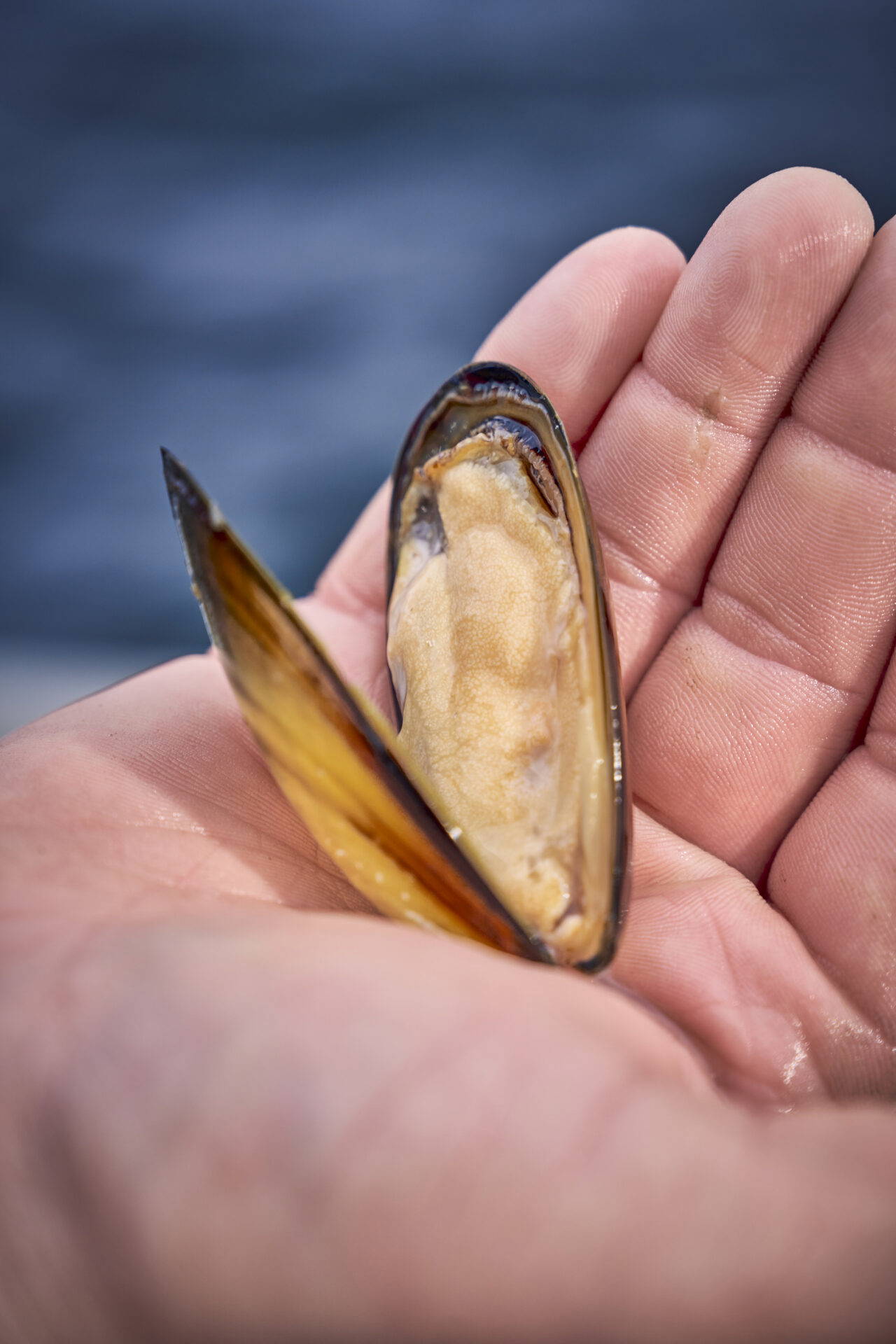
I still remember that crisp morning in Shetland, standing on the deck of a mussel boat with salt spray on my face and sea air whipping through my hair. As the Shellfish Ambassador, I’d seen and tasted a lot—but nothing quite like this. The skipper plucked a plump mussel straight from the rope, flicked it open with his knife, and without hesitation, popped it out and ate it right there on the deck.
“Your turn,” he said with a grin.
So, I did. Raw mussels are mild, subtly briny, and delicately sweet, but the texture can feel slippery and understated. So whilst not an unpleasant experience, cooking does transform them and intensifies their natural sweetness, firms them up, and brings out rich, buttery, briny flavours that make them far more satisfying for most palates.
Why Raw Mussels Are Uncommon in the UK
Eating mussels raw is rare in the UK, largely due to taste and texture preferences rather than safety concerns. All live shellfish sold here—including mussels—must meet strict safety standards, whether they’re eaten raw or cooked. That means they’re handled, transported, and stored carefully, just like oysters. Mussels can only be sold if they come from Class A waters or have been properly purified or heat-treated, making them safe for market.
So theoretically, yes, you could eat them raw—but most people are simply more familiar with the taste and texture of cooked mussels.
What Risks Are There?
Scottish mussels are monitored for natural toxins, like okadaic acid, which can cause shellfish poisoning. If toxin levels are high, areas of mussel farms are closed until they are safe to harvest. Farms are also regularly tested for bacteria to keep information current and protect public health.
Most Scottish mussel farms operate in Class A waters, usually in low-population areas with limited agriculture, which reduces contamination risk. Still, mussels can accumulate bacteria and viruses—like norovirus—if surrounding waters are exposed to human or animal faecal contamination.
Does Cooking Mussels Make Them Safer to Eat?
Cooking mussels at home—through steaming or boiling does make them safer to eat by lowering microbial risks while bringing out richer flavours and a better texture.
Mussels can open at temperatures lower than those needed to kill all harmful bacteria or viruses, so lightly cooking is not enough and you should ensure they are steaming hot before serving. That’s why shellfish from Class B areas must be purified or heat-treated using approved methods before sale and why Scottish Mussels are from Class A waters.
Bottom Line
Raw mussels aren’t as widely eaten as raw oysters or sushi. They can be eaten when extremely fresh, but for most people, cooking is both safer and more enjoyable. Steaming or boiling enhances the flavour, softens the texture, and makes this delicious Scottish shellfish even more satisfying.