
Low Impact
Farmed Scottish Mussels, like those usually found in supermarkets and restaurants, are a sustainable choice and green-rated on the Marine Conservation Societies’ Good Fish Guide.
Did you know that Mussels have a lower carbon footprint than any other farmed animal protein in the UK.?
Mussels grow on ropes attached to floats that are suspended in the water. They grow by filtering nutrients and plankton from the sea.
Mussels help to encourage biodiversity
Mussels act as natural water filters. Filtering algae and other excess nutrients that can negatively affect other marine life.
By helping to keep the water clean they encourage bio diversity, creating a refuge and positive environment for juvenile fish and invertebrates to thrive.
Scottish Mussel farmers take great care in protecting the water in which they farm, recognising that all marine life has a right to be there and should be protected.
Scottish Farmed mussels have been independently certified by the MSC for over 12 years, further establishing it as a great sustainable seafood choice.

hover the graphic to find out more
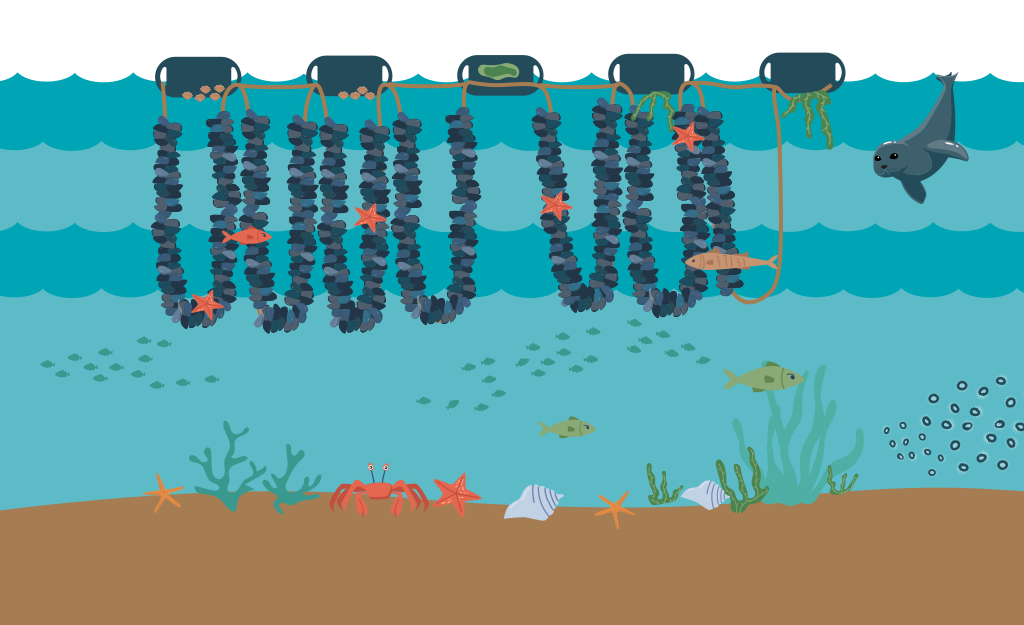
Mussels provide a plentiful food source for a wide range of animals
Even seals and orcas stop by for a visit
Algae and seaweed grow on our barrels
Supporting the wild population through reproduction
No impact on endangered, threatened and protected species and habitats
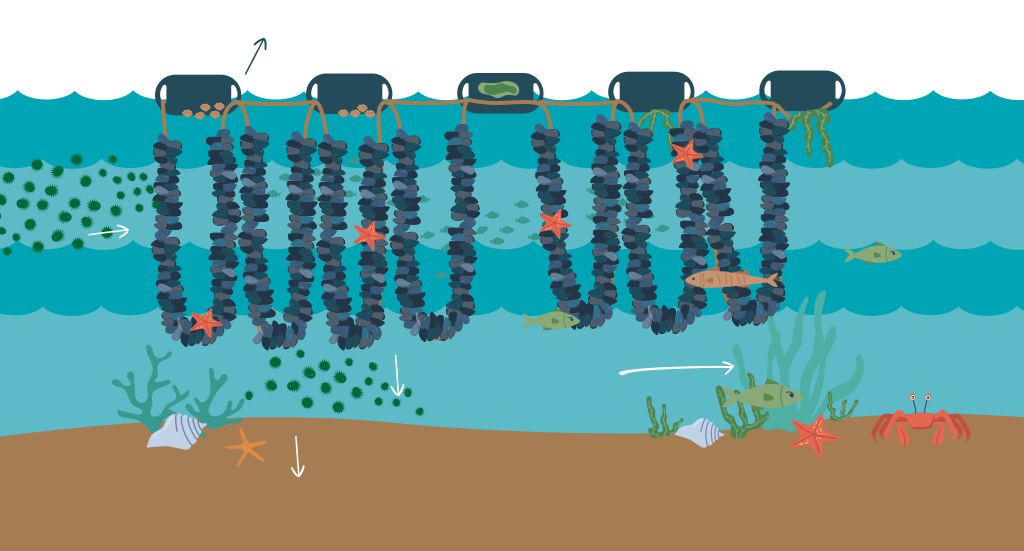
Suspended nutrients filtered by mussels and used for growth
Removed during harvest
Biodeposition of unused nutrients onto sediment
Through decomposition and microbial processing, nutrients are recycled and fuel the benthic food web
Some stored in sediment, old shells also contain carbon which is locked away here
Low Impact
Farmed Scottish Oysters, are a sustainable choice and green-rated on the Marine Conservation Societies’ Good Fish Guide. Did you know that Oysters have a lower carbon footprint than most other farmed animal protein in the UK? In the pristine and remote waters of the Inner Hebrides and the coastal regions of Scotland, oysters are being meticulously cultivated. These filter feeders flourish on the microscopic algae and plankton that float in the water. As the tide flows in, it delivers a continuous supply of these essential nutrients, ensuring a steady food source for the oysters.
Oyster lifecycle
The journey of a Scottish Pacific Oyster begins with spat, or baby oysters, which are collected from hatcheries . These spat are carefully placed into net bags or cages suspended in the water, where they are gently tumbled by the tides. This tumbling ensures that each oyster grows evenly and develops a strong shell.
As they grow, the oysters feed naturally on plankton and microscopic algae, filtering the water and contributing to a healthier marine environment. Over the course of 2–3 years, they gradually mature into full-sized oysters, accumulating protein, omega-3 fatty acids, vitamins, and minerals.
By the time they are ready for harvest, Scottish Pacific Oysters are not only a nutritious food source but also an environmentally sustainable one, helping maintain water quality and supporting biodiversity in the coastal ecosystem.
Anatomy of a Rock Oyster
(Pacific Oyster)

Gills – filter water and takes nutrients for grow.
Stomach
Heart
Cerebral Ganglion
Abductor Muscle
Anus & Rectum
Shell – Created by capturing carbon from the atmosphere.